
PEMF for Animals
- Home
- /
- PEMF For Animals
Your dog limps a little more after long walks than she used to.
Your cat doesn’t jump onto the counter anymore.
Your horse is slower to recover between competitions.
You’ve noticed, and you’re looking for something that can help without adding medications or invasive procedures to the mix.
PEMF therapy works the same way for animals as it does for people. The pulsed electromagnetic fields penetrate tissue, support circulation at the cellular level, and encourage the body’s own recovery processes.
If you’re already familiar with how PEMF works, the good news is the same principles apply across species. Dogs, cats, horses, and other animals all respond to PEMF because the underlying biology, cellular energy production and tissue repair, operates on the same mechanisms.

How Dogs and Cats Benefit from PEMF
Dogs and cats are the most common animals we see PEMF used with, and the scenarios tend to fall into a few predictable categories.
Post-Surgical Recovery
After a spay, neuter, TPLO knee repair, or any soft tissue surgery, your pet’s body has a lot of repair work ahead. PEMF supports that process by encouraging healthy circulation in the tissues surrounding the surgical site.
Many pet owners report that their dogs seem more comfortable and return to normal activity sooner when PEMF is part of the recovery plan. You’re not replacing your vet’s post-op instructions. You’re giving your pet’s body an extra tool to work with while it heals.
Joint Stiffness and Aging
Senior dogs, especially larger breeds like Labradors, German Shepherds, and Golden Retrievers, often develop stiff joints that make stairs, car rides, and even standing up from a nap harder than it used to be. Cats tend to hide joint discomfort better, but you’ll notice it when they stop jumping to their favorite perch or hesitate before climbing.
PEMF sessions can support comfort and mobility in aging pets by promoting circulation in stiff, inflamed joint tissue. It won’t reverse arthritis, but it can make your 11-year-old Lab’s morning a little easier.
Stress and Anxiety
This one surprises people. PEMF isn’t only about physical recovery. Many pet owners use low-intensity sessions to help dogs who struggle with separation anxiety, noise sensitivity (thunderstorms, fireworks), or general nervousness.
Cats with stress-related behaviors, like over-grooming or hiding, sometimes respond well too. The sessions seem to promote a calming effect, and most animals settle into them quickly once they realize it’s a comfortable experience.
Active and Working Dogs
If your dog competes in agility, dock diving, flyball, or field trials, their body absorbs repetitive impact that adds up over a season. Hunting dogs cover miles of rough terrain in a single weekend.
PEMF between training sessions and competitions supports faster muscular recovery, similar to how a human athlete might use it after a hard workout. You’re helping your dog’s body bounce back so the next session doesn’t start with lingering fatigue from the last one.
PEMF for Horses
The equine world adopted PEMF early, and it remains one of the most popular applications. Trainers, barn managers, and owners use PEMF to support recovery after training and competition, encourage comfort during rehabilitation, and maintain overall physical resilience in performance horses.
The demands of dressage, jumping, barrel racing, and endurance riding create repetitive strain patterns that respond well to consistent PEMF use.
We have a full page dedicated to equine applications, including how trainers and barn professionals are incorporating PEMF into daily routines. Visit our PEMF for Horses page for the complete guide.

Other Animals That Respond to PEMF
PEMF isn’t limited to dogs, cats, and horses. Veterinarians and animal professionals use it with a wider range of species than most people expect.
Livestock operations use PEMF to support recovery in cattle and goats, particularly after calving or during rehabilitation from leg and hoof injuries. Rabbit and small-animal rescues have used PEMF to support comfort in animals recovering from surgery or dealing with chronic conditions.
Exotic animal veterinarians have explored PEMF with birds and reptiles, though protocols for these species are still evolving and require closer veterinary oversight.
The common thread across all of these animals is the same: PEMF supports the body’s own repair and comfort mechanisms. The differences come down to session length, intensity settings, and applicator placement, which vary based on body size, tissue depth, and the specific area you’re targeting.
Introducing PEMF to Your Animal
Animals can’t tell you what they’re feeling during a session, so your observation matters more than it does with human clients. Start with shorter sessions at lower intensity settings, and pay attention to your animal’s body language. A dog that lies down and relaxes is telling you something different than a dog that paces or tries to move away.
Most dogs accept PEMF within the first session or two. Cats can take a little longer to settle in, but placing the applicator near (not on) them while they rest in a familiar spot works well.
Horses typically respond calmly from the start, especially if the session follows a familiar grooming or cool-down routine.
If your animal has a specific condition or has recently had surgery, talk with your veterinarian before starting PEMF. We always recommend coordinating with your vet so PEMF complements, rather than conflicts with, their treatment plan.
PEMF in Veterinary Practice
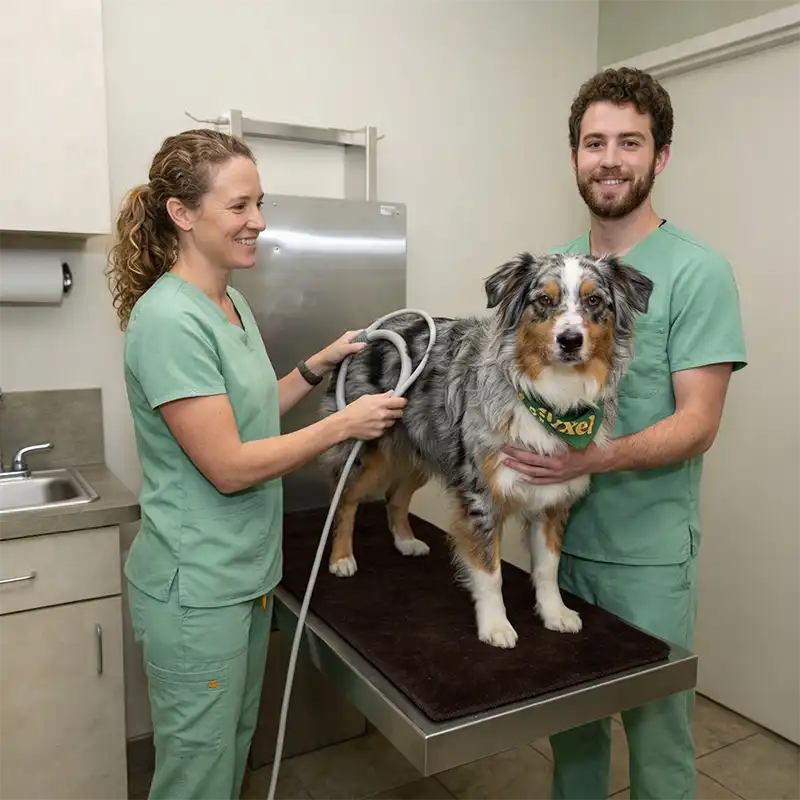
A growing number of veterinary clinics, rehabilitation centers, and animal chiropractors now include PEMF as part of their treatment offerings. If you’re a veterinary professional considering PEMF for your practice, there are a few things worth knowing.
PEMF fits into existing rehab protocols without disrupting them. It pairs well with laser therapy, hydrotherapy, therapeutic exercise, and manual therapies like chiropractic adjustment and massage.
Many rehab vets use PEMF as a first step in a session because it promotes circulation and comfort before hands-on work begins, which can make the rest of the session more productive.
From a practical standpoint, a single unit can serve multiple patients in a day, and sessions typically run 15 to 30 minutes depending on the animal’s size and the condition you’re addressing. There’s no sedation required, no shaving, no consumables to reorder. Most animals relax during sessions, and some fall asleep.
The Same Device for Your Whole Family
One of the practical advantages of PEMF is that you don’t need separate equipment for yourself and your animals. The same unit you’d use for your own recovery or wellness routine works for your dog, cat, or horse. You adjust the intensity and session length based on who you’re treating and what you’re targeting, but the device itself is the same.
That means a single investment covers your household. If you’re recovering from a knee replacement and your senior dog has stiff hips, you’re both using the same unit on the same day.
Talk to Us Before You Start
Every animal is different, and the best approach depends on your pet’s size, age, condition, and temperament. We’ll walk you through device selection, recommended session protocols, and applicator placement for your specific situation.
If you’re a veterinary professional exploring PEMF for your clinic, we’re happy to discuss clinical integration, multi-patient workflows, and volume options.
Reach out to us at here and we’ll help you figure out the right setup, whether that’s a purchase, a rental to try it first, or a conversation about what PEMF can and can’t do for your animal.