
PEMF for Horses
- Home
- /
- PEMF For Horses
Horses ask more of their bodies than most animals on the planet.
- A dressage horse holds collected frames that load the hind joints for hours across a training week.
- A barrel racer accelerates, stops, and pivots at forces that stress tendons and ligaments in patterns no amount of conditioning fully prevents.
- An endurance horse covers 50 to 100 miles in a single event, then needs to recover fast enough to pass vet checks along the way.
- A working ranch horse that spends long days sorting cattle absorbs repetitive concussion through the legs and back that accumulates over months and seasons.
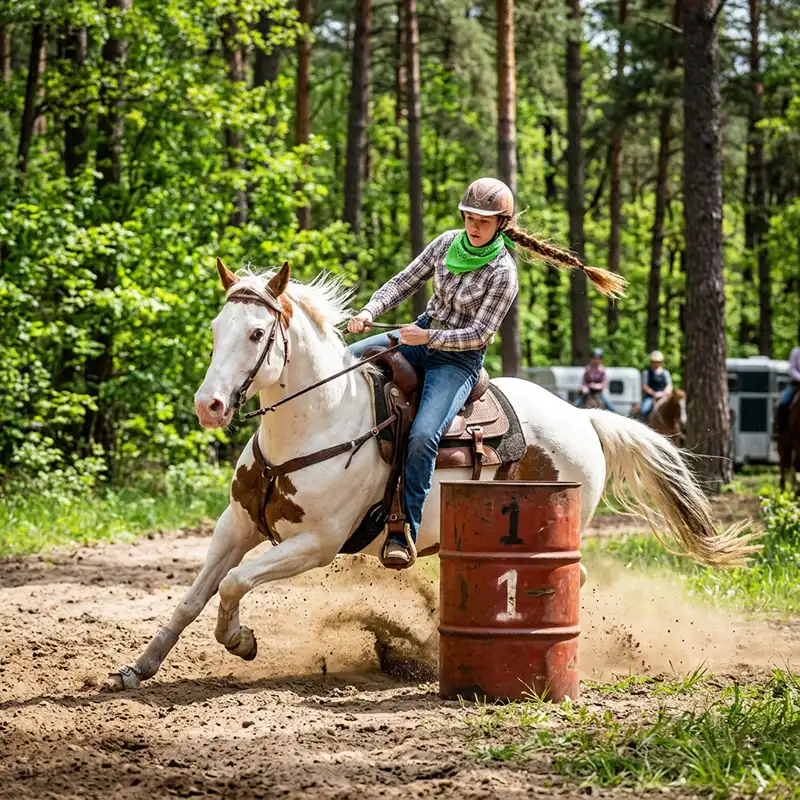
PEMF therapy has become one of the most widely adopted non-invasive recovery tools in the equine world because it addresses something every horse owner, trainer, and barn manager deals with: keeping a horse comfortable, sound, and resilient under sustained physical demand.
If you’re already familiar with how PEMF works, the principles are the same for horses as for humans. The pulsed electromagnetic fields penetrate deep tissue, support circulation at the cellular level, and encourage the body’s own repair processes.
Common Equine Scenarios Where PEMF Helps
Post-Training and Post-Competition Recovery
After a hard school, a cross-country round, or a weekend show, your horse’s muscles, joints, and connective tissues need recovery time. That’s true whether they performed well or came out of the ring a little sore.
PEMF supports this process by encouraging circulation in fatigued tissues and promoting the kind of cellular-level recovery that rest alone can take longer to achieve.
Many trainers run a PEMF session within a few hours of competition, during the cool-down window when the horse is back in the stall and the body is shifting from performance mode into repair mode.
Think of it as the equine equivalent of an athlete’s post-game ice bath, except there’s no cold water and your horse doesn’t mind it at all.
Joint and Back Comfort
Stiffness in the hocks, stifles, and back is one of the most common complaints among sport horse owners. It shows up gradually: your horse is a little reluctant to pick up the left lead, or shorter in stride on one side, or stiffer coming out of the stall in the morning than they were six months ago.
These patterns often reflect cumulative strain rather than a single injury. PEMF supports comfort and mobility in those areas by promoting circulation in the tissue surrounding stiff or inflamed joints. It won’t undo degenerative changes, but it can help your horse move more freely and start each session in a better place than they would without it.
Leg and Hoof Recovery
The lower legs take a beating in every discipline. Tendon and ligament strain, splints, windpuffs, and general “filling” after hard work are part of life for performance horses.
PEMF applied to the lower legs and hoof area supports recovery by encouraging circulation in structures that don’t have a strong blood supply on their own. Tendons and ligaments heal slowly because they receive less blood flow than muscle tissue.
PEMF can help offset that disadvantage by promoting microcirculation in those areas during recovery periods.
Travel Stress and Recovery
Long trailer rides are harder on horses than most owners realize. A horse hauled six hours to a show has been bracing its legs, tensing its back and neck, and standing in a position that restricts normal movement the entire trip.
Dehydration, muscle fatigue, and general stiffness after transport are common, especially in older horses or those that don’t ship well. A PEMF session after unloading helps your horse recover from the physical stress of travel before you add the physical stress of competition on top of it.
Maintenance for Older Horses
A 16-year-old schoolmaster or retired show horse doesn’t need competition-level recovery protocols. They need consistent support for the wear and tear that accumulated over a long career.
Regular PEMF sessions, even two or three times a week at moderate settings, help maintain comfort and mobility in horses whose joints and soft tissues carry years of accumulated stress.
Many owners of older horses say PEMF is the single addition to their horse’s routine that produced the most visible change in day-to-day comfort.
Fitting PEMF into Barn Routines
One of the reasons PEMF caught on in the equine world faster than in almost any other market is that it fits into routines that already exist.
You don’t need to change your training schedule, add a special facility, or rearrange your day. The most common integration points look like this:
- Before work: A 15 to 20 minute session before training can promote circulation and help loosen a horse that tends to start stiff. This works especially well for horses that are turned out overnight and come in cold, or for horses that are stall-kept and don’t move much before their first ride of the day.
- After work: A 20 to 30 minute session after training, during cool-down or while the horse is in the stall, supports the transition from exertion to recovery. Many trainers consider this the single most valuable PEMF window because the body is already in active repair mode.
- On rest days: Low-intensity maintenance sessions on off days help keep circulation and recovery moving between training days. For horses in heavy work, rest-day PEMF sessions can make the difference between a horse that comes out fresh on Monday and one that’s still carrying fatigue from Saturday.
- After shipping: A post-travel session before bedding down for the night helps offset the physical effects of trailering and gives the horse a better starting point for the next morning.
Applicator Placement for Horses
Horses have deep, dense muscle tissue and thick connective structures, so applicator placement matters more than it might with a smaller animal.
The back, from withers to croup, is the most common placement area because it covers the large muscle groups that do the heaviest work during riding.
For targeted support, you can position the applicator over specific joints (hocks, stifles, knees), the lower legs, or the neck and poll area.
We walk every customer through placement recommendations based on their horse’s discipline, known problem areas, and body type. A warmblood with chronic hock stiffness needs a different approach than a Quarter Horse recovering from a suspensory strain.
If you’re unsure where to start, that’s what the initial conversation with us is for, as well as our follow up Zoom calls.
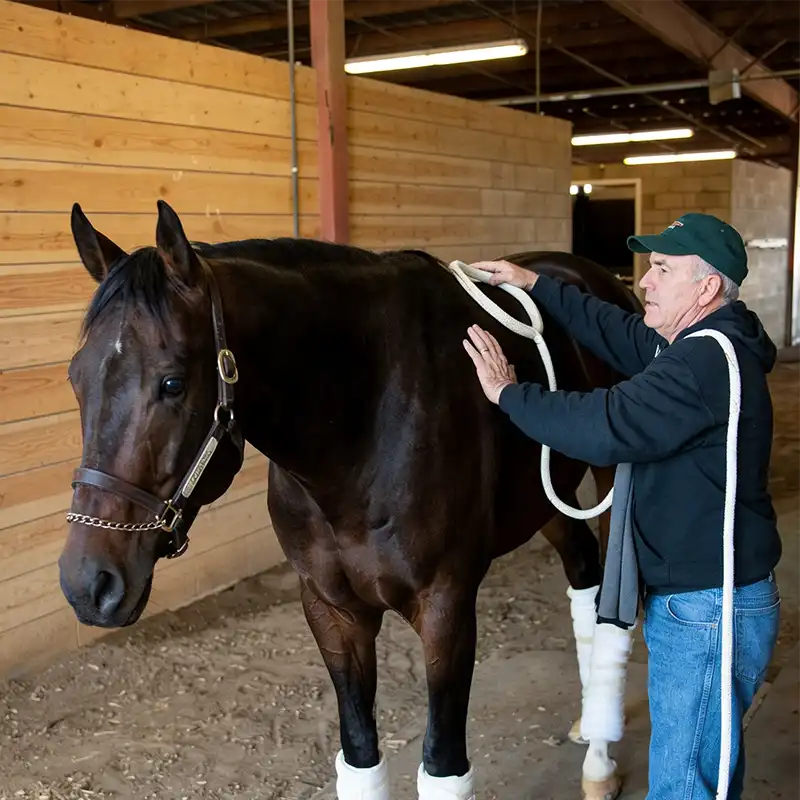
For Trainers, Barn Managers, and Equine Professionals
If you manage multiple horses, PEMF offers a practical advantage: one device serves the entire barn. A single session runs 15 to 30 minutes, requires no consumables, and needs no specialized training beyond understanding placement and intensity selection.
You can run sessions between training rides, during grooming, or while horses are on the crossties or in their stalls.
PEMF also pairs well with other modalities you may already use. Equine chiropractors, massage therapists, and acupuncturists often report that sessions are more productive when PEMF is used beforehand because the tissues are more receptive.
If your barn already works with an equine bodyworker or rehab vet, PEMF integrates into that workflow without replacing any part of it.
For barns running a heavy competition schedule, consistent PEMF use across the string can help maintain soundness and comfort over a long season.
The horses that benefit most aren’t always the ones with obvious issues. They’re the ones carrying low-grade cumulative fatigue that hasn’t surfaced as a visible problem yet.
Coordination with Your Veterinarian
PEMF doesn’t replace veterinary care, and we never recommend it as a substitute for proper diagnosis or treatment.
If your horse has an acute injury, a lameness that hasn’t been evaluated, or a condition under active veterinary management, talk to your vet before starting PEMF. The goal is for PEMF to complement your vet’s recommendations, not to operate outside of them.
That said, many equine vets are already familiar with PEMF and may even recommend it as part of a rehab plan. If your vet hasn’t worked with PEMF before, we’re happy to provide information that helps frame the conversation.
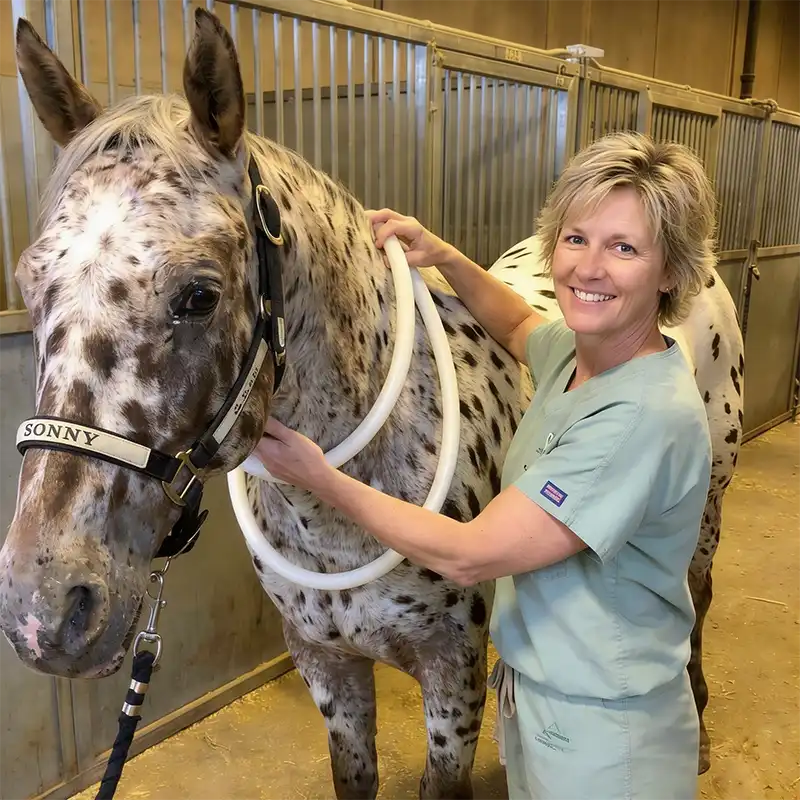
The Same Device You’d Use at Home
The units we offer work for both human and equine use. You don’t need a separate “horse PEMF” system. The same unit you’d use for your own post-workout recovery or joint comfort works on your horse with adjusted intensity and placement.
If you’re a rider dealing with your own aches after a long day in the saddle, you and your horse can share the same device.
Talk to Us About Your Horse
The best PEMF protocol for your horse depends on their age, discipline, workload, and what you’re trying to support. A young event horse in full competition season needs a different approach than a retired trail horse with stiff joints.
We’ll help you work through device selection, session timing, intensity settings, and placement so you’re getting the most out of every session.
Reach out to us at on our contact page to start the conversation, whether you’re looking to rent a unit to try first or ready to add PEMF to your barn’s routine.